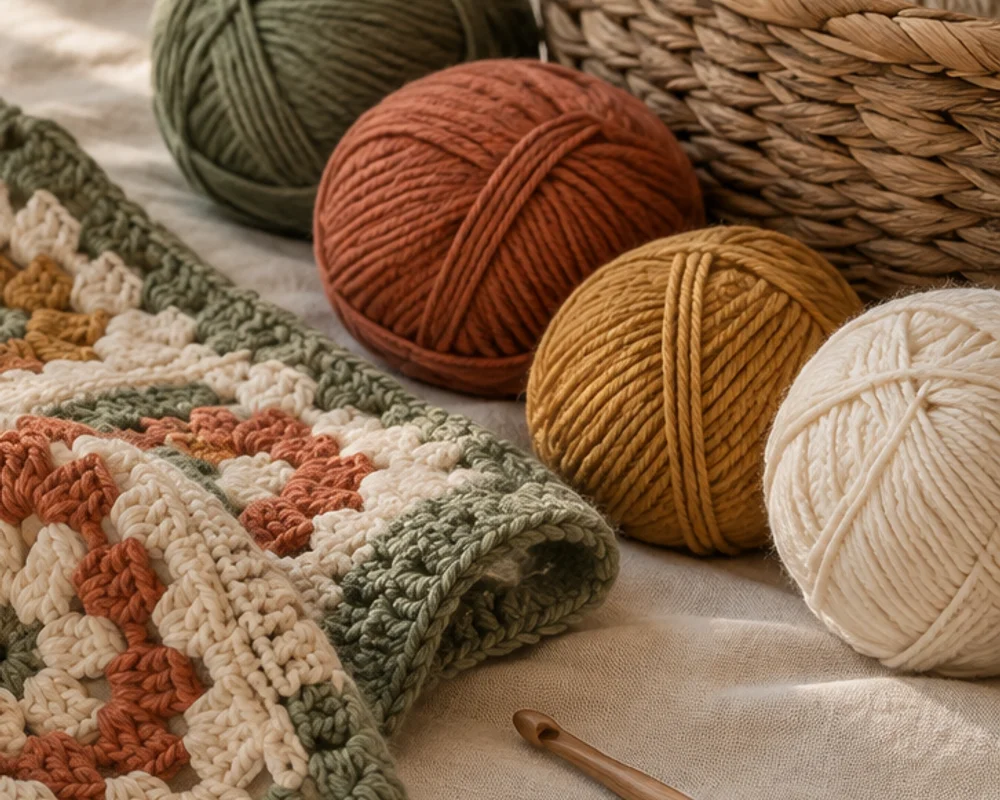
Yarn weight means thickness
In a crochet pattern, yarn weight describes a thickness category. It does not mean how heavy the ball is. A 100 g ball of thin yarn can contain more length than a 100 g ball of thick yarn. That distinction helps you understand why buying the same number of balls does not always provide enough yarn for a substitute.
For your first lessons, a smooth, light-colored medium yarn is easy to inspect. Avoid treating the category alone as a guarantee: the yarn’s construction, fiber, and your hook all affect the fabric you make.
Read the category on the label
The Craft Yarn Council yarn weight system uses categories from 0 to 7. These run from lace through super fine, fine, light, medium, bulky, super bulky, and jumbo. Category 3 often includes DK yarn, while category 4 includes yarns sold as worsted or aran.
Names vary between regions and manufacturers. DK is a thickness name, not a requirement to knit with two strands. The word ply can describe construction or appear in a regional thickness name; it is not a dependable substitute for checking the actual yarn label and gauge.
The hook ranges shown in reference charts are starting guidelines. A pattern may deliberately use a different size to create a firm or open fabric. Follow the pattern’s gauge instructions when size matters.
Fiber changes how fabric feels
- Acrylic: often available in many colors and useful for practice. Check the specific label for care.
- Cotton: useful for a simple coaster or bookmark. It generally feels less springy than wool, so keep your grip relaxed.
- Wool: can make warm, resilient fabric. Washing instructions vary, and not all wool is machine washable.
- Blends: combine fibers, so read the percentages and care information rather than assuming one fiber controls every property.
Pick the fiber for the job. A bookmark benefits from thin, stable fabric; a scarf may benefit from softness and drape. A yarn that feels pleasant in the ball can feel different after it becomes a dense crochet fabric. A small swatch lets you evaluate it before committing.
Texture and color affect learning
Smooth yarn lets you see the top loops of each stitch. Very fuzzy yarn, eyelash yarn, and plush chenille can hide those loops. They can be enjoyable materials once you understand stitch placement, but they add an extra challenge at the beginning.
Choose a solid pale or medium shade for practice. Strong color changes can make stitch counting harder, and very dark yarn may need stronger lighting. If your hook repeatedly splits the strand into separate fibers, slow down and check its angle. Try a different smooth yarn or hook if the splitting continues.
Save the useful label details
Before throwing away the band, record the yarn name, fiber content, category, length in yards or meters, ball weight, recommended hook, and care instructions. A dye lot identifies a production batch. If you need several balls for one project, matching lots can help reduce unexpected shade differences.
Compare length as well as ball weight when substituting yarn. Check that the replacement suits the project, then make a gauge swatch. Matching a broad category alone does not guarantee matching finished dimensions, feel, or yardage needs.
Keep a little yarn sample with the label. Later, you will be able to connect the written information with the fabric you made and decide whether you would choose it again.
Try a label-reading exercise
Choose one ball and identify four things: thickness category, fiber, length, and suggested crochet hook size. Put a note beside it saying what you plan to practice. If a label gives only knitting needle guidance, check the manufacturer’s crochet recommendation rather than assuming the tools use the same size.
Can I use yarn I already own? Yes, if you can see its stitches clearly and find a suitable hook. Do thicker yarns always make easier projects? No. Oversized tools and textured strands can still be awkward. Continue to How to Hold a Crochet Hook, using a yarn that lets you see what your hands are doing.